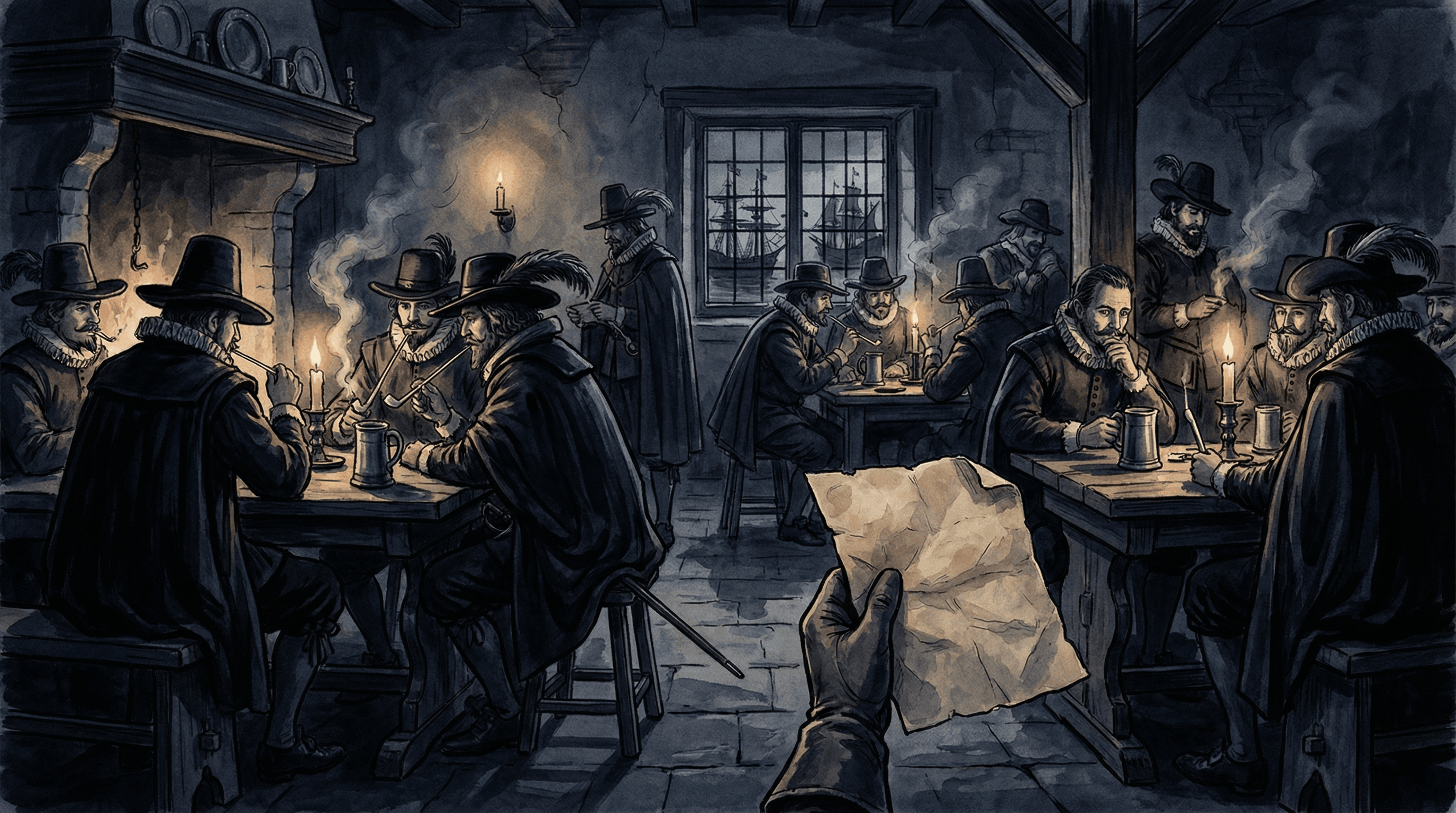
The bulb in your hand looks like an onion.
That's the honest truth of it. Brown, papery, unremarkable. A tulpenbol[TUL-pen-bol] that, according to the man who just sold it to you in the tavern on the Bloemenmarkt, will bloom in April into a Semper Augustus — the most coveted tulip in the Republic. Flame-streaked, crimson and white, impossibly rare.
You paid 3,000 guilders for it.
That's twelve years of a carpenter's wages. It's more than the house two streets over. Your neighbour sold his brewery for less.
But you've done the maths. Last November, the same bulb sold for 1,000. In December, 2,000. Today: 3,000. By April, when you sell the blooms? Perhaps 5,000. Perhaps more. Everyone at the beurs[BERS] is doing it. The fishmonger. The baker. The preacher's widow.
You are going to be rich.
Here's what nobody could see coming.
The tulip craze had been building for three years. What started as a luxury trade among collectors became something stranger — a futures market. You didn't even need the bulb. You bought a contract for a bulb to be delivered in spring. Then you sold the contract. Then someone else sold it again. Paper on top of paper on top of paper.
At its peak in January 1637, a single Semper Augustus bulb changed hands for 10,000 guilders. For that price, you could have bought a grand canal house, a horse-drawn carriage, a cellar full of wine, and enough furniture to fill every room.
Then, on the third of February, something very small happened.
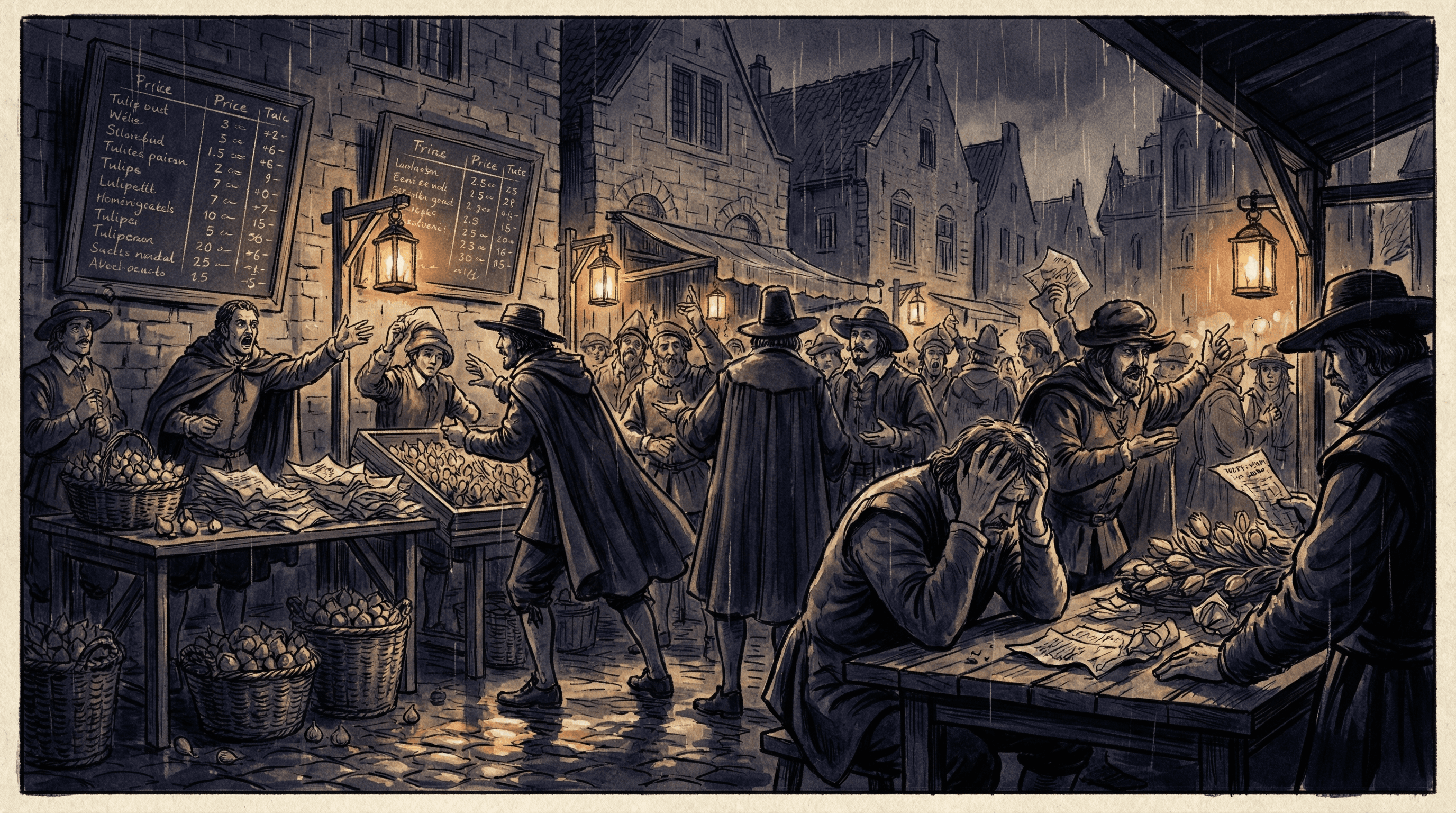
A routine auction in Haarlem. The auctioneer called the opening bid. No one raised their hand. He tried again. Silence. The tulips went unsold. The news reached Amsterdam by nightfall.
By morning, winst[VINST] had turned to verlies[ver-LEES] for half the city.
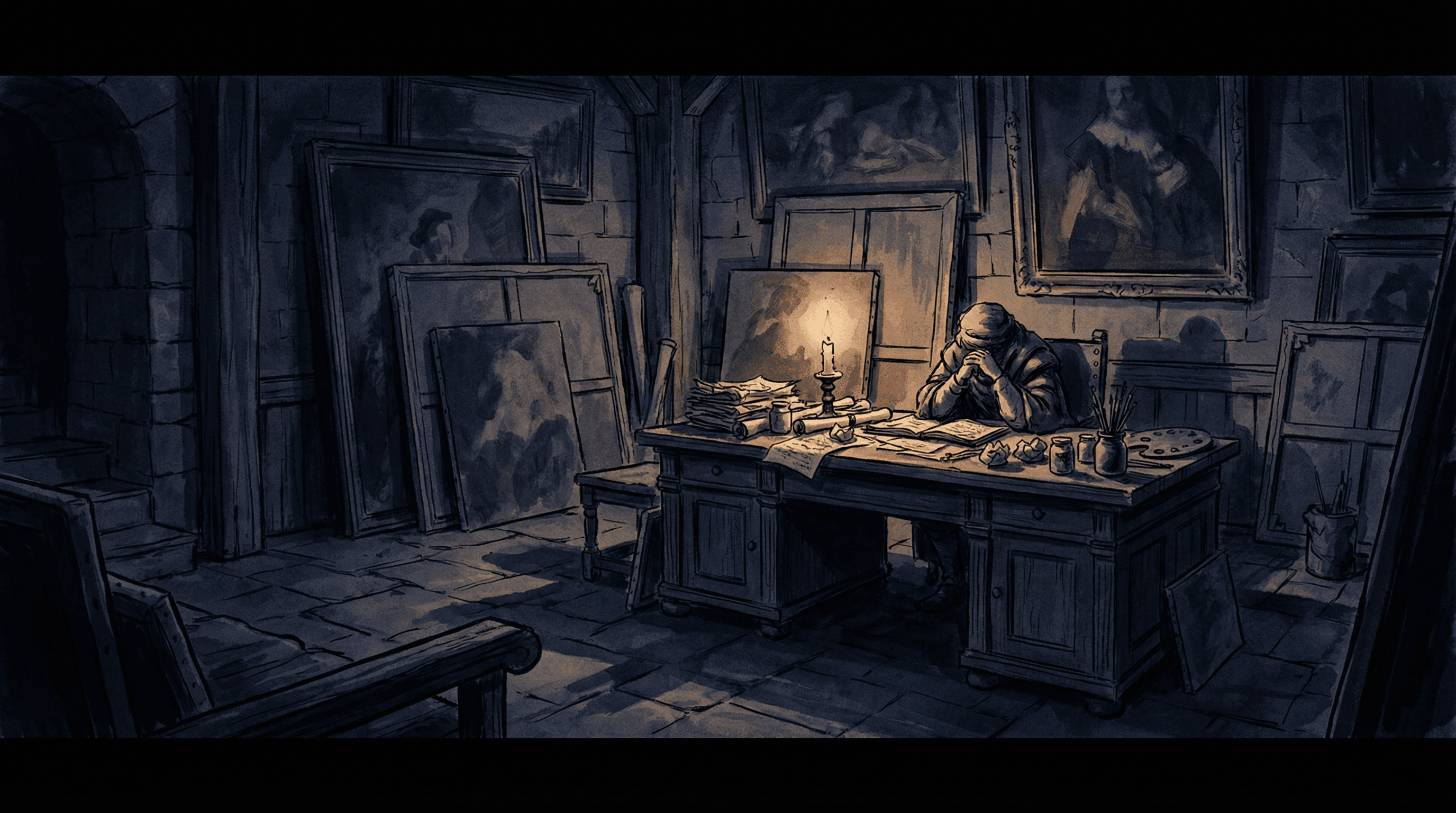
The contracts you'd signed — to buy bulbs at spring prices — were suddenly worth a fraction of what you'd promised. Courts refused to enforce them. The government shrugged. Within weeks, the market had collapsed by 99%.
The tulpenbol is still in your hand.
It doesn't know it's worthless. It will still bloom in April — crimson and white, impossibly beautiful, exactly as promised.
You set it on the table.
It's just an onion.