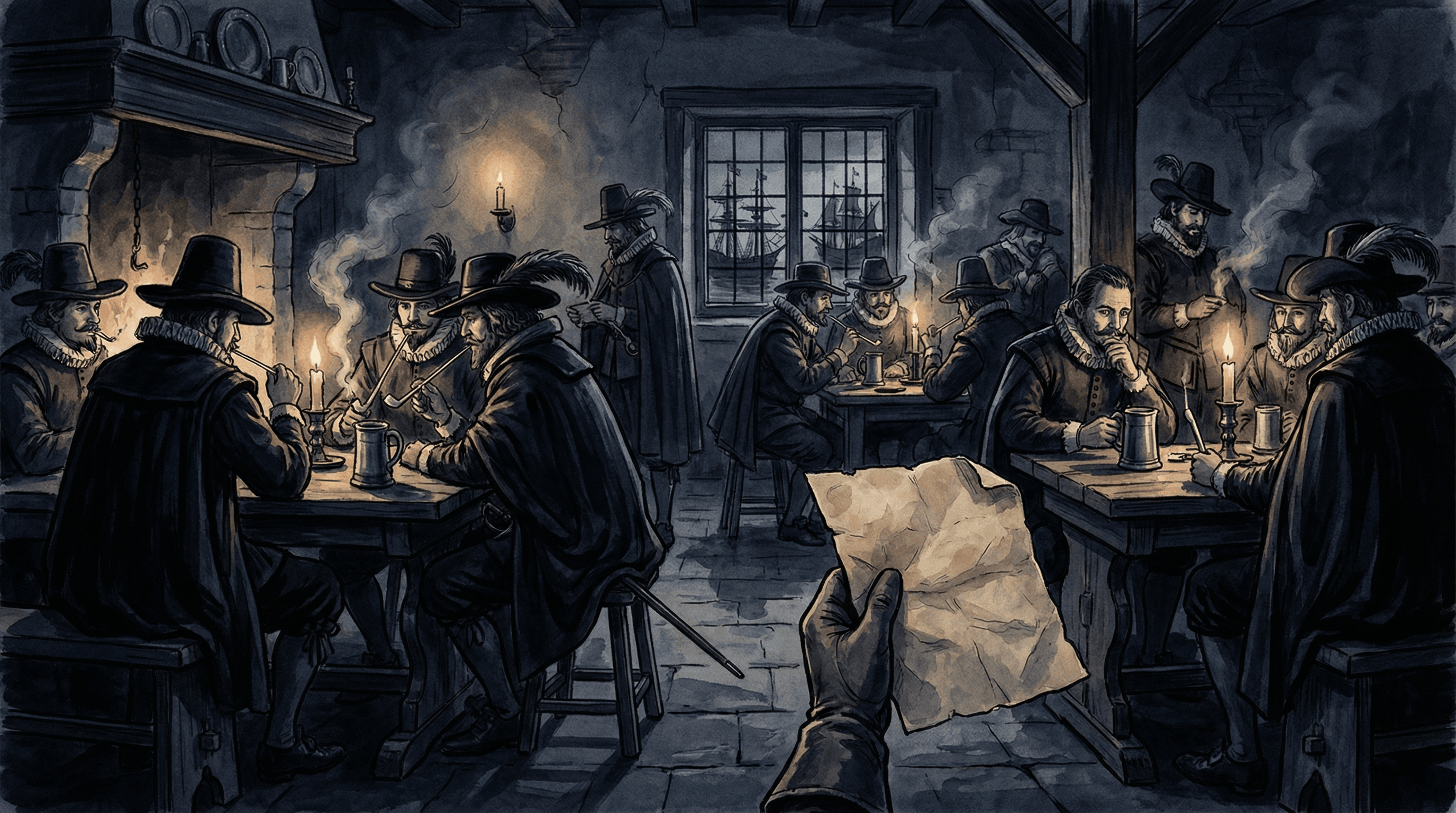
The list runs to 363 items.
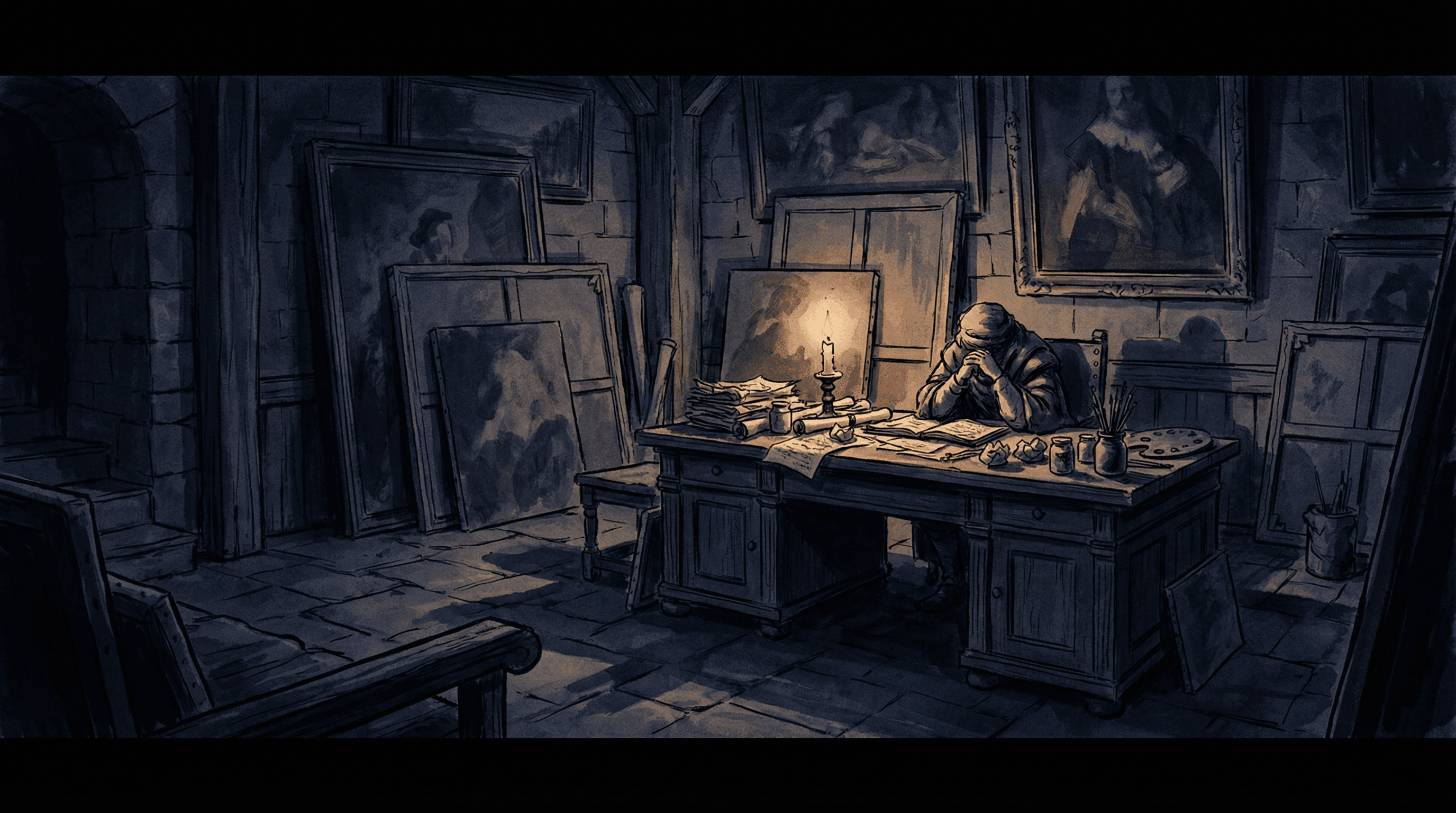
You're reading it by candlelight in the great house on the Breestraat, the one Rembrandt van Rijn bought for 13,000 guilders twenty years ago, the one he never quite finished paying for. The list is an inventory. Everything in this house. Everything that will be auctioned next week to pay his schuld[SKHULT].
Fourteen of his own paintings. Dozens more by Raphael, van Eyck, Rubens — the greatest collection of kunst[KUNST] in private hands in Amsterdam. Japanese armour. A stuffed crocodile. Two globes. A pile of Roman busts. A box of minerals. Seven alabaster figures. Feathers. Seashells.
It reads like the mind of a man who could not stop collecting the world.
By 1656, Rembrandt van Rijn is fifty years old and the most famous painter alive.
He is also completely broke.
It hadn't happened quickly. The meester[MAY-ster] had simply spent as if the commissions would never stop — the portraits, the history paintings, the biblical scenes with their impossible licht[LIKHT] pouring from nowhere. For twenty years he had been the man everyone wanted. Then tastes shifted. The city's new money wanted something smoother, more flattering, more French.
Rembrandt painted the truth instead.
He painted faces with wrinkles. Fabrics with weight. Shadows that meant something. The Nightwatch, commissioned in 1642, had already confused the men who paid for it — they'd wanted a ceremonial portrait; he gave them drama, movement, a painting that seemed to move.
The debts had quietly compounded. The house. The art collection. The loans. By the summer of 1656, there was no way through.
He filed for cessio bonorum — not bankruptcy, exactly, but a surrender of possessions in lieu of payment. More dignified. The courts agreed. The auction began.
Here is what the auction did not take:
His eyes. His hands. The way he understood that a face in half-shadow tells more truth than a face in full light.
In the years after the auction, working from a modest house in the Jordaan, Rembrandt painted some of the greatest works in human history. The Jewish Bride. The Return of the Prodigal Son. Self-portraits that looked straight through you and asked nothing in return.
The schuld was paid in a different currency entirely.